I am big on planning your journey in life. Nothing happens by chance. If you want it, you plan for it, and you revisit your growth goals on a regular basis to stay on course and adjust as needed.
My ten personal 2015 goals in no particular order:
1) Walk more plus exercise 30 minutes every other day in addition to walking at least 5,000 steps each day. Fitbit makes this easy to track.
2) Eat healthy snacks - goodbye junk snacks. Hello more home grown produce and gardening! I will begin my raised bed gardens in February this year. I have green onions, radishes, and lettuce mix seeds ready to plant.
3) Scrapbook more - so many pictures, so many papers, so little time! At the end of the year, I want to give scrapbooks as gifts to my family.
4) Spend more time golfing. Shave off 6 strokes for a better golf handicap and play in the local chapter championship. Can't wait to get out to the golf course to try my new petite woman's clubs!
5) Stress less; practice yoga more. Gout is a painful form of arthritis. Acute and chronic at times, my gout is aggravated by stress. Even cutting out all meat, shellfish and beer doesn't help if the stress level remains too high. Lately I've been walking with glass shards piercing my toes. Gout causes uric acid to remain in your bloodstream and get deposited in joints like knees and toes. Gout symptoms are always exacerbated after any particularly stress-filled period, which in this case was the death of my sister. Miss her so much even though we rarely agreed. Not a day goes by that I don't want to talk to her.
6) Set up multiple streams of income; this is a pre-retirement plan to have sufficient income once I don't work full-time. My Etsy business is "Ladies Tees and Such" and I am working to stock it. Nothing in there yet. Also will be on Tradesy and E-bay. Considering renting a local booth at an antique mall. (I get the retirement question all the time: when are you retiring? Answer: I will always work at something. Work is critical to my well-being.) I have sold z-e-r-o e-books, so that is a 2014 disappointment but I will continue to add to my e-books list. Never give up!
7) Continue to improve musically; I have specific goals like better breath control and phrasing in voice and playing my flute at Church.
8) Create a waterfall add-on to our little pond and landscape around it to make it a true oasis to enjoy in the morning and evening.
9) Explore new cooking techniques and cuisines; take some vegetarian cooking classes.
10) Do spiritual journalling. I love to write and I love Jesus; I am fascinated by allowing the Holy Spirit to write through me.
As far as my 3 - dog farm objectives: I am getting out of beekeeping. After much thought, I realize that my property does not sustain enough nectar sources to keep bees. I will be selling my hives and equipment. Sad about that but it is the only conclusion I can make after trying for 5 years to keep bees. I will post an inventory of every thing I have bee-related and a estimated price for it all.
Monday, January 19, 2015


Saturday, January 10, 2015
When Winter is in Alabama, Where are the June Bugs?
I am enjoying the bitterly cold weather by sitting inside on my couch and looking through my seed and plant catalogs planning for that first day of vegetable gardening. There is something to be said for staying inside and close to a fire. We have been eating the canned and frozen produce from our gardens this winter too. We enjoyed the last of the freezer pesto sauce made with my garden's fresh basil. It was so very good and I want to be sure to have more fresh herbs in the garden this year. There is joy in planning which seeds and seedlings will be tried in the garden. I am already dreaming of an early spring planting day for radishes, green onions, peas, and lettuce. Can't wait to try some of the new varieties of these plants.
I regret I have not taken a vacation day from work to turn my garden soil yet. Why would one turn soil on a cold winter day? Glad you asked! We have something in the soil that loves to overwinter in their grub state and emerge late June to early July ravenous for fresh summer produce, the Japanese beetle. Their better known name is June bug and they are as insidious as kudzu in the South. These bugs love to eat summer vegetables and herbs, particularly asparagus, basil, okra, peppers and greens. They can be very destructive to gardens. I wish that I had turned up the gardens before this latest cold snap hit to expose and freeze these free-loaders. Right now they are enjoying their life living a little below root level in our gardens, laying low and waiting for warmer weather like us.
During winter smart farmers will turn up the soil in an effort to organically control these nasties. There are other, natural ways to control them like nematodes, and Milky Spore products. I've had dogs that relished eating these insects once the grubs morphed into their adult beetle form and the dogs would run crazy eights in the yard catching one after another. My Dad said he would catch them as a kid and tie a thread to them and watch them fly in a circle. (My Dad told stories like that one and I could never quite believe it - seeing is believing - it is hard to tie a thread to these critters.)
Many home owners battle moles not realizing that the moles (and skunks) are digging in their lawns for Japanese beetle grubs. The home owner tries to kill the moles not realizing that they need to treat their lawns for grubs and get rid of the mole's food source. If you have a mole you can trap it; and many traps will also kill it. Generally moles are solitary creatures but can have an extensive network of tunnels. which only attract more moles when they find an empty home. Rather than battling moles, battle the grubs.
June Bug Life Cycle: University of Arkansas
I regret I have not taken a vacation day from work to turn my garden soil yet. Why would one turn soil on a cold winter day? Glad you asked! We have something in the soil that loves to overwinter in their grub state and emerge late June to early July ravenous for fresh summer produce, the Japanese beetle. Their better known name is June bug and they are as insidious as kudzu in the South. These bugs love to eat summer vegetables and herbs, particularly asparagus, basil, okra, peppers and greens. They can be very destructive to gardens. I wish that I had turned up the gardens before this latest cold snap hit to expose and freeze these free-loaders. Right now they are enjoying their life living a little below root level in our gardens, laying low and waiting for warmer weather like us.
During winter smart farmers will turn up the soil in an effort to organically control these nasties. There are other, natural ways to control them like nematodes, and Milky Spore products. I've had dogs that relished eating these insects once the grubs morphed into their adult beetle form and the dogs would run crazy eights in the yard catching one after another. My Dad said he would catch them as a kid and tie a thread to them and watch them fly in a circle. (My Dad told stories like that one and I could never quite believe it - seeing is believing - it is hard to tie a thread to these critters.)
Many home owners battle moles not realizing that the moles (and skunks) are digging in their lawns for Japanese beetle grubs. The home owner tries to kill the moles not realizing that they need to treat their lawns for grubs and get rid of the mole's food source. If you have a mole you can trap it; and many traps will also kill it. Generally moles are solitary creatures but can have an extensive network of tunnels. which only attract more moles when they find an empty home. Rather than battling moles, battle the grubs.
June Bug Life Cycle: University of Arkansas
Saturday, December 27, 2014
Blackberries and Siamese Cats
My Dad loved blackberries and made blackberry wine as well as jam. He never tried domesticated thornless blackberries though; he loved anything free and blackberry plants are free along roadsides and fence rows in the South. He would dig up the wild blackberries and transplant them closer and closer to his home. He transplanted the plants with the weeds and briars that always accompany blackberries. He was able to mow around the patches as they grew but it was still a difficult pick that resulted in bleeding arms, pricked fingers and surprise critters.
When I was young and living at home, summer was blackberry picking time. Mom would hand me a big bucket and point to the door. Every year from the time the blackberries were ripe for picking until we went back to school, I suffered the ill-effects of chiggers and poison ivy found in the blackberry patches. I swore that I would have a blackberry patch without the extras one day.
In 2013 I moved my domesticated, thornless blackberry plants that were barely living and planted on the fringes of our mature oak trees to their own raised bed garden. I mixed their soil with chicken manure and oak leaves, coffee grounds and grass clippings. I planted irises between them. Then I waited for 2014.
In 2014, the blackberry plants produced like crazy. Mike and I picked, and picked, and picked. We had blackberry cobbler, blackberry pancakes, fresh blackberries and my favorite blackberry jam. We gave blackberry jam to all my co-workers, my neighbor and my brother. I finally had blackberries to eat and share and freeze and absolutely loved it. Jima and I pulled the old canes out this year, wired up the new canes which are probably 12 foot long or more. There are no chiggers, no ticks, no snakes, no thorns and no weeds in my blackberry patch but there are Siamese cats.
I have heard that other people have trouble with birds destroying their almost ripe blackberries. I didn't this year and hope that continues in the future. I think I did not have any issue because of two Siamese cats. The black Siamese sisters are named Blackberry and Huckleberry and Blackberry, per her namesake, has a special affinity for the blackberry patch where she waits for unsuspecting birds and human hands or feet. There were many blackberry picking sessions that had to be interrupted to chase the cat out of the blackberry patch first. Blackberry is incredibly sneaky and as a kitten could wait for the absolute perfect time to pounce on a hand reaching into the thick blackberry leaves concealing her. It would first startle me and then the work of ejecting the cat from the blackberry patch would begin as she darted between the openings. Her sister, wondering about the commotion, would join us to investigate in typical Siamese cat fashion and then join her sister in the high-spirited hide and seek game. Both were eventually caught and tossed out of the patch so Mike and I could continue picking the berries.
I'm ready for 2015 and the joy of the blackberry patch with the "girls"; it is a success in raised bed gardening and in using cats for vermin control!

When I was young and living at home, summer was blackberry picking time. Mom would hand me a big bucket and point to the door. Every year from the time the blackberries were ripe for picking until we went back to school, I suffered the ill-effects of chiggers and poison ivy found in the blackberry patches. I swore that I would have a blackberry patch without the extras one day.
In 2013 I moved my domesticated, thornless blackberry plants that were barely living and planted on the fringes of our mature oak trees to their own raised bed garden. I mixed their soil with chicken manure and oak leaves, coffee grounds and grass clippings. I planted irises between them. Then I waited for 2014.
In 2014, the blackberry plants produced like crazy. Mike and I picked, and picked, and picked. We had blackberry cobbler, blackberry pancakes, fresh blackberries and my favorite blackberry jam. We gave blackberry jam to all my co-workers, my neighbor and my brother. I finally had blackberries to eat and share and freeze and absolutely loved it. Jima and I pulled the old canes out this year, wired up the new canes which are probably 12 foot long or more. There are no chiggers, no ticks, no snakes, no thorns and no weeds in my blackberry patch but there are Siamese cats.
I have heard that other people have trouble with birds destroying their almost ripe blackberries. I didn't this year and hope that continues in the future. I think I did not have any issue because of two Siamese cats. The black Siamese sisters are named Blackberry and Huckleberry and Blackberry, per her namesake, has a special affinity for the blackberry patch where she waits for unsuspecting birds and human hands or feet. There were many blackberry picking sessions that had to be interrupted to chase the cat out of the blackberry patch first. Blackberry is incredibly sneaky and as a kitten could wait for the absolute perfect time to pounce on a hand reaching into the thick blackberry leaves concealing her. It would first startle me and then the work of ejecting the cat from the blackberry patch would begin as she darted between the openings. Her sister, wondering about the commotion, would join us to investigate in typical Siamese cat fashion and then join her sister in the high-spirited hide and seek game. Both were eventually caught and tossed out of the patch so Mike and I could continue picking the berries.
I'm ready for 2015 and the joy of the blackberry patch with the "girls"; it is a success in raised bed gardening and in using cats for vermin control!
Sunday, December 21, 2014
Shortest Day of the Year - Winter Solstice - 4th Sunday of Advent
We celebrated the 4th Sunday of Advent today. The service was lovely, and the music haunting. There was one verse in particular from an advent hymn that sent chills up my spine. The hymn is "Each Winter As the Year Grows Older" and the verse is "When race and class cry out for treason, When sirens call for war, They over shout the voice of reason, And scream till we ignore All we held dear before." The tune is sung to the better known Carol of Hope. The words in this verse made me see images in my mind of Eric Brown's arrest and death, the protestors of police profiling and killing young black men and the senseless violence against NYPD this week. Crazy world that we live in has been the same crazy world as long ago. I truly disbelieve all who say the world is worse than ever. Before, this type of news would have been hushed, covered up. We would never have seen it the same day.
From the hymn "Creator of the Stars of Night" comes this refrain: "Come, O Lord, and bring your light, O radiant star, our hearts' delight, O god with us, Emmanuel, with your love, the dark dispel".
On this shortest day of the year in the Northern Hemisphere, may we let light chase the dark away from us. May truth and justice and clear heads prevail!
From the hymn "Creator of the Stars of Night" comes this refrain: "Come, O Lord, and bring your light, O radiant star, our hearts' delight, O god with us, Emmanuel, with your love, the dark dispel".
On this shortest day of the year in the Northern Hemisphere, may we let light chase the dark away from us. May truth and justice and clear heads prevail!
Saturday, December 6, 2014
They're Dead, Now What: Your Role as Personal Representative of your Parents' Estate
My e-book is available for purchase now. It is everything I learned as a crash course in how to handle the probate process in Alabama. Fortunately the process is the same in most every state. I feel it would have been an extremely helpful book to have in my library when both my parents' died within six months of each other. My intent is to help someone else know what I know sooner than I knew it. Let me know your opinion of it if you buy it. And thank you for buying it, much appreciated!
http://www.amazon.com/Theyre-Dead-Now-What-Representative-ebook/dp/B00O170JP4
http://www.amazon.com/Theyre-Dead-Now-What-Representative-ebook/dp/B00O170JP4
In Memoriam of SaraLee Oden Neely, My Only Sister
I have one Sister who passed into a better life November 16, 2014, at the age of 52. She had Multiple Sclerosis and was taking many different medications and various treatments to control its symptoms. It is my uneducated medical opinion that the medications and treatments killed her. She died of advanced non-fatty liver disease, which caused total failure of her liver and kidneys. Because MS is an auto-immune disorder, she was not a candidate for a liver and kidney transplant. She was terrified of dying but in those last weeks she stepped up and was heroic in accepting that it was her time. Her last wish was to see her estranged brother but that did not happen to my knowledge. God has her in his arms and she is not in pain or afraid any longer. I will see her again when it is my time to go; I have no doubt there is a Heaven and that Sara is there already as God's newest Angel.

Update on Pond
A picture is worth a thousand words. Here you go:

My brother recommended getting some feeder fish from the pet store and putting them in the pond to begin the biological cycle of nitrates and phosphates. I need to sink a few broken clay pots to provide the fish hiding spots from the blue herons and raccoons that will be drawn to the water and an easy food source. The cats should love the feeder fish too. If nothing else it will be fun watching the cats watching the fish. In the spring time I plan on introducing native American fish to the pond, which I must catch since bluegills and bream are not sold in stores.
Already under consideration is a upper pond and waterfall. Just saying.
My brother recommended getting some feeder fish from the pet store and putting them in the pond to begin the biological cycle of nitrates and phosphates. I need to sink a few broken clay pots to provide the fish hiding spots from the blue herons and raccoons that will be drawn to the water and an easy food source. The cats should love the feeder fish too. If nothing else it will be fun watching the cats watching the fish. In the spring time I plan on introducing native American fish to the pond, which I must catch since bluegills and bream are not sold in stores.
Already under consideration is a upper pond and waterfall. Just saying.
Income Tax Audit Results
We received back a refund from the State of Alabama - no explanation - of $53. I think it is related to our energy efficient roof shingle installation. I was on the conservative side in my estimate of what we could deduct from our taxes. Very happy to come out on the positive side of a tax audit!
Monday, September 29, 2014
Pond Construction and Landscaping
We have hand dug a small pond that holds about 1,000 gallons US and filled it with tap water, dropped a submersible pump and filter that runs 350 gallons per hour through it. Starting to landscape around the pond today. There will be two scoops of river rock delivered today. Then we will let it overwinter, get it biologically correct for aquatic life and add plants in the Spring and a few comets later. This is my place to relax. More pics as it progresses. You can see that our land is rocky. All those little rocks came from digging. You can buy really nice landscaping rocks cheaply @ .15 - .17/pound. Need a propane fire pit and bug zapper for comfort outside. The cats think the pond is for them.


Income Tax Audit
We are being audited by our State's Department of Revenue for taking an energy credit for installing energy-efficient shingles on our roof. We are on our second round of communication. I must provide the cancelled check to prove the amount paid out of pocket. Would be good of them to state specific requirements in their first letter.
Monday, September 22, 2014
Happy Fall Eqiunox 2014!
I cannot believe two years has gone by. In those two years my youngest daughter has married and has our first grandson who turns one in two weeks. My honeybees have been a disappointment. I am starting all over this winter and hope to be successful with honey output next year. My gardens continue to grow and flourish. We have hand dug our first small pond.
The reason for my silence has been grief over losing both parents, and a favorite aunt within six months plus the heartbreak of losing a beloved brother over a disagreement on how to divide our parent's home among five siblings. I have written an e-book to help explain the Alabama probate system in as simple terms as possible. I will share bits and pieces here but the book will be on Amazon for .99 in about six weeks with my personal reflections on being the personal representative of my Mom's estate. Hope you buy it. Proceeds will feed the chickens and bees on 2- dog farm.
The reason for my silence has been grief over losing both parents, and a favorite aunt within six months plus the heartbreak of losing a beloved brother over a disagreement on how to divide our parent's home among five siblings. I have written an e-book to help explain the Alabama probate system in as simple terms as possible. I will share bits and pieces here but the book will be on Amazon for .99 in about six weeks with my personal reflections on being the personal representative of my Mom's estate. Hope you buy it. Proceeds will feed the chickens and bees on 2- dog farm.
Sunday, November 18, 2012
November Greetings
As of today, the tomatoes have been picked clean in the garden. We've enjoyed the tomoatoes fresh from the garden since June. The Burpee cherry tomato plants have been prolific producers. The size of these tomatoes have been from small cough drop size to golf ball size and the taste has been fantastic.
I have about 25-30 green tomatoes sitting on the kitchen counter to work into our meals over the next week. I'm thinking fried green tomatoes. We still have a lettuce mix that is producing some awesome tasting salads and the bok choy and garlic are fantastic.
Rooster Fred II has gone to a new home. Fred I and Fred II were engaging in combat and the girls were caught between two roosters fighting for dominance over the flock. Fred II went home with a middle school student who loves chickens. Fred II will be free-ranging and he should love that. My two barnevelder hens are laying beautiful brown eggs. I have high hopes for my chickens now that we have the extra rooster removed from the flock dynamics. Fred (no longer need to designate Fred I or Fred II) and his girls will have a much happier home.
I'm not really sure what my neighbor men think of me naming my animals after them. Our closest neighbor is Charlie Johnson. Our shorkie's name is Charley. I'm outside yelling at the dog, "Here Charley, come here Charley." Our neighbor three doors down (these are country-sized three doors down) is Fred. I've named my rooster Fred as well. Fred, our neighbor, passed before we had Fred the Rooster. The next animal we bring home will be named Don. Don Browning is the funniest neighbor ever and would get a kick out of a goat being named after him. Just saying.
I really wanted to get into the hive yesterday to check on the small hive beetle trap, fill-up the sugar water and check on the general condition of the bees. I was out and about town though and by the time I got back home, the temperature was already below 60 degrees F. Opening the hive below 60 degrees is a no go for me. So I left it alone until today.
I have ordered a new, semi-permanent electric fence for the chickens and bees. The fence is on back-order until late November, early December. It will increase the range for the chickens to about 1/4 an acre.
Hubby and I have discussed taking some cuttings of his Mom's chestnut tree to plant in our garden. That chestnut tree is a prolific producer year after year. Since his parent's home is on the market for sale, it would be one thing to help remember the place where he grew up.
We are almost ready for power outages due to weather related events in our area. We have a gasoline generator on back order. Once we have it, we're getting an electric chain saw to use with it. Can't wait to get the electric chain saw as I have many large tree limbs to cut and burn. We have our power outage/emergency supplies ready as well. We will never be caught without extra lights, water and food like we were the week of the April tornados in 2011.
Here at 2-dog Farm, we wish you Happy Thanksgiving!
I have about 25-30 green tomatoes sitting on the kitchen counter to work into our meals over the next week. I'm thinking fried green tomatoes. We still have a lettuce mix that is producing some awesome tasting salads and the bok choy and garlic are fantastic.
Rooster Fred II has gone to a new home. Fred I and Fred II were engaging in combat and the girls were caught between two roosters fighting for dominance over the flock. Fred II went home with a middle school student who loves chickens. Fred II will be free-ranging and he should love that. My two barnevelder hens are laying beautiful brown eggs. I have high hopes for my chickens now that we have the extra rooster removed from the flock dynamics. Fred (no longer need to designate Fred I or Fred II) and his girls will have a much happier home.
I'm not really sure what my neighbor men think of me naming my animals after them. Our closest neighbor is Charlie Johnson. Our shorkie's name is Charley. I'm outside yelling at the dog, "Here Charley, come here Charley." Our neighbor three doors down (these are country-sized three doors down) is Fred. I've named my rooster Fred as well. Fred, our neighbor, passed before we had Fred the Rooster. The next animal we bring home will be named Don. Don Browning is the funniest neighbor ever and would get a kick out of a goat being named after him. Just saying.
I really wanted to get into the hive yesterday to check on the small hive beetle trap, fill-up the sugar water and check on the general condition of the bees. I was out and about town though and by the time I got back home, the temperature was already below 60 degrees F. Opening the hive below 60 degrees is a no go for me. So I left it alone until today.
I have ordered a new, semi-permanent electric fence for the chickens and bees. The fence is on back-order until late November, early December. It will increase the range for the chickens to about 1/4 an acre.
Hubby and I have discussed taking some cuttings of his Mom's chestnut tree to plant in our garden. That chestnut tree is a prolific producer year after year. Since his parent's home is on the market for sale, it would be one thing to help remember the place where he grew up.
We are almost ready for power outages due to weather related events in our area. We have a gasoline generator on back order. Once we have it, we're getting an electric chain saw to use with it. Can't wait to get the electric chain saw as I have many large tree limbs to cut and burn. We have our power outage/emergency supplies ready as well. We will never be caught without extra lights, water and food like we were the week of the April tornados in 2011.
Here at 2-dog Farm, we wish you Happy Thanksgiving!
Sunday, November 4, 2012
Homegrown Goodness

Saturday, November 3, 2012
Catch-up weekend
My oldest daughter spent about two weeks with us during October. She went with me to Montgomery Alabama to attend the Alabama Beekeepers Annual Meeting. The meeting was well done; there was plenty of information for the beginner as well as the experienced hobbyist. Both of the State Bee Hive Inspectors were present and answered many concerns of the more commercial beekeepers. My daughter was pumped about bees; she was ready to get back to the house and help me. Well, that was until the bees got a bit aggressive. She wasn't stung but I had removed one of the frames to go from 10 frames to 9 frames in the hive. I made the mistake of moving the frame into my outside shed. We forgot about it and started to clean out the shed, organizing, getting rid of unneeded items, cleaning. First one bee found the frame, then five bees, and it grew until there were about 30 bees dive-bombing us trying to get to the frame that had their scent on it. I finally broke out the Bee-Go and sprayed the shed. That seemed to stop the frenzy from building any further. Wow, it was very impressive show of how quickly they mass.
We are hearing coyotes at night yipping. I think we have a pack along the bluff, which is good. The wild turkey flock needs thinning. I've seen one coyote along the bluff. I was on the deck and it was down below. It was very large and had a very intense stare as it decided if I was food and worth a run and grab meal or if I could eat it. It finally lopped away. I will never, ever call them dogs - they are predators through and through. Due to hearing the coyotes' yipping at night, I went out to test my solar powered electric fence today. I also cleared the fence line from all debris. The fence will be replaced soon - I bought it from Premier and it has been a very good deterrent. This is its fourth year. Nothing will deter a predator all the time but the electric fence and consistent daily presence of human smells seems to help keep the raccoons, possums, deer, neighbor's dogs and so far (fingers-crossed) the coyotes outside.
My roosters have learned to crow! A full, robust cockle-doodle do crow. I am so proud. Unlike the wild roosters in Hawaii that crow from sundown to sunup, my roosters are crowing at about 7 a.m. each day. Hope it stays that way. The roosters are no longer juveniles. They are swaggering around the chicken yard now. I hope I have raised them so they do not attack me. Hopefully they will have some fear and caution of humans.
Have a glorious weekend!
We are hearing coyotes at night yipping. I think we have a pack along the bluff, which is good. The wild turkey flock needs thinning. I've seen one coyote along the bluff. I was on the deck and it was down below. It was very large and had a very intense stare as it decided if I was food and worth a run and grab meal or if I could eat it. It finally lopped away. I will never, ever call them dogs - they are predators through and through. Due to hearing the coyotes' yipping at night, I went out to test my solar powered electric fence today. I also cleared the fence line from all debris. The fence will be replaced soon - I bought it from Premier and it has been a very good deterrent. This is its fourth year. Nothing will deter a predator all the time but the electric fence and consistent daily presence of human smells seems to help keep the raccoons, possums, deer, neighbor's dogs and so far (fingers-crossed) the coyotes outside.
My roosters have learned to crow! A full, robust cockle-doodle do crow. I am so proud. Unlike the wild roosters in Hawaii that crow from sundown to sunup, my roosters are crowing at about 7 a.m. each day. Hope it stays that way. The roosters are no longer juveniles. They are swaggering around the chicken yard now. I hope I have raised them so they do not attack me. Hopefully they will have some fear and caution of humans.
Have a glorious weekend!
Wednesday, October 17, 2012
Apis mellifera L. - good information to know from a beginning beekeeper
Here is a list of information for a beginning beekeeper:
Buy at least two reference books: 1) First Lessons in Beekeeping by Keith S. DeLaplane available through Dadant.com for about $7.50 and 2) The Beekeeper's Handbook by Diana Sammataro and Alphonse Avitabile for about $30 from many online sources.
The above suggested reference books are How-To guides. If you want beekeeping broken down even more, purchase Beekeeping for Dummies by Howland Blackiston. Finally, an encyclopeida of beekeeping is found with the compact but hefty: The ABC & XYZ of Bee Culture for about $50.
These four books form your core beekeeping library. Read them, re-read them and then read them again. Once you have absorbed the knowledge, you will realize that beekeeping can be done a hundred different ways within these guidelines.
Buy new hives. There are some unethical beekeepers who will offer their diseased hives for sale. DO NOT BUY USED HIVES unless you know the person and/or there are multiple beekeepers who will vouch for the beekeeper's integrity and honesty. Nothing is worse than bringing home another bee yards problems. New hives run about $170.00 and can be purchased fully assembled and ready to place in the bee yard. Once you begin to be more knowledgeable, you can buy parts, assemble the hives and frames yourself or even make your own. But please do not do any of this until you have experience under your belt.
Mark and register your hives. In Alabama, every beekeeper is required to register their hive(s) with the State of Alabama. You will need to determine a mark for your hives and mark every single component of the hive. Going back to the previous bullet, there are unethical beekeepers who will steal hives. It is a long shot to recover your hive because it can be identified with your mark but without a mark, you can guarantee it cannot be traced back to you.
Buy quality package bees with a queen. I prefer the American bees with the super hygenic queens from R. Weaver Apiaries in Texas. A package with the queen runs about $115. Your package for next spring needs to be ordered no later than November 1st of the current year. First dibs on the available packages go to long-standing orders from commercial beekeepers. Once those orders are filled, the hobbyist/new beekeepers orders are filled. Expect your package around mid-April (earliest) to mid-May (latest). No one can guarantee when the packages will ship. These are living animals who produce as they see fit. All types of problems can prevent your bees from shipping. Be ready to install them within 24 hours of receipt into the hive. Plan on feeding them throughout the spring, summer, fall and winter until the next honey flow at the end of the following winter.
You will kill a hive through stupidity or unintentional neglect. It will happen. You learn and move on.
Have a hive tracking system. Use a notebook or an on-line software tool such as Hive Tracks, which is free. You want to know the condition of the hive every time you open it. You will want to know when you last treated for tracheal mites or varroa mites or hive beetles. You will want to track how much comb/brood you see and the general condition of the hive.
Plan on harvesting honey on the hottest day of the year - in a full beekeeper's suit with veil. You will sweat, it is work, get in and out of the hive as quickly as possible. The honey needs to be extracted from the frames as quickly as possible due to hive beetles, moths and a host of other problem insects that will slime your honey comb.
Lastly, you will be stung. Again and again depending on the length of time you have the hive open and in various locations. The bees can get up your sleeves or pants legs if you have not secured them closed. They love inside your fingers. It does hurt. For most people, it is not a major event. "Oh, I've been stung", is what you think and you continue working the hive. It swells, it itches, you get the stinger out and you move on. Remember you are invading their home; what would your reaction be if someone invaded your home?
I encourage young people to pursue a beekeeping hobby. When I attend these state meetings, I see an age range of 45 - 75. I want to see more young people. Yes, it takes time to be a beekeeper: about one half hour a week per hive. More in the summertime when one harvests the honey. You can keep bees anywhere there is at least a ten foot clearance for the bees to get out of the hive and fly up and off to find pollen and nectar. Garden balcony, rooftop, back yards are some of the locations a beehive can be set up. If you have gardens nearby, your yield will increase dramatically due to the bees.
Buy at least two reference books: 1) First Lessons in Beekeeping by Keith S. DeLaplane available through Dadant.com for about $7.50 and 2) The Beekeeper's Handbook by Diana Sammataro and Alphonse Avitabile for about $30 from many online sources.
The above suggested reference books are How-To guides. If you want beekeeping broken down even more, purchase Beekeeping for Dummies by Howland Blackiston. Finally, an encyclopeida of beekeeping is found with the compact but hefty: The ABC & XYZ of Bee Culture for about $50.
These four books form your core beekeeping library. Read them, re-read them and then read them again. Once you have absorbed the knowledge, you will realize that beekeeping can be done a hundred different ways within these guidelines.
Buy new hives. There are some unethical beekeepers who will offer their diseased hives for sale. DO NOT BUY USED HIVES unless you know the person and/or there are multiple beekeepers who will vouch for the beekeeper's integrity and honesty. Nothing is worse than bringing home another bee yards problems. New hives run about $170.00 and can be purchased fully assembled and ready to place in the bee yard. Once you begin to be more knowledgeable, you can buy parts, assemble the hives and frames yourself or even make your own. But please do not do any of this until you have experience under your belt.
Mark and register your hives. In Alabama, every beekeeper is required to register their hive(s) with the State of Alabama. You will need to determine a mark for your hives and mark every single component of the hive. Going back to the previous bullet, there are unethical beekeepers who will steal hives. It is a long shot to recover your hive because it can be identified with your mark but without a mark, you can guarantee it cannot be traced back to you.
Buy quality package bees with a queen. I prefer the American bees with the super hygenic queens from R. Weaver Apiaries in Texas. A package with the queen runs about $115. Your package for next spring needs to be ordered no later than November 1st of the current year. First dibs on the available packages go to long-standing orders from commercial beekeepers. Once those orders are filled, the hobbyist/new beekeepers orders are filled. Expect your package around mid-April (earliest) to mid-May (latest). No one can guarantee when the packages will ship. These are living animals who produce as they see fit. All types of problems can prevent your bees from shipping. Be ready to install them within 24 hours of receipt into the hive. Plan on feeding them throughout the spring, summer, fall and winter until the next honey flow at the end of the following winter.
You will kill a hive through stupidity or unintentional neglect. It will happen. You learn and move on.
Have a hive tracking system. Use a notebook or an on-line software tool such as Hive Tracks, which is free. You want to know the condition of the hive every time you open it. You will want to know when you last treated for tracheal mites or varroa mites or hive beetles. You will want to track how much comb/brood you see and the general condition of the hive.
Plan on harvesting honey on the hottest day of the year - in a full beekeeper's suit with veil. You will sweat, it is work, get in and out of the hive as quickly as possible. The honey needs to be extracted from the frames as quickly as possible due to hive beetles, moths and a host of other problem insects that will slime your honey comb.
Lastly, you will be stung. Again and again depending on the length of time you have the hive open and in various locations. The bees can get up your sleeves or pants legs if you have not secured them closed. They love inside your fingers. It does hurt. For most people, it is not a major event. "Oh, I've been stung", is what you think and you continue working the hive. It swells, it itches, you get the stinger out and you move on. Remember you are invading their home; what would your reaction be if someone invaded your home?
I encourage young people to pursue a beekeeping hobby. When I attend these state meetings, I see an age range of 45 - 75. I want to see more young people. Yes, it takes time to be a beekeeper: about one half hour a week per hive. More in the summertime when one harvests the honey. You can keep bees anywhere there is at least a ten foot clearance for the bees to get out of the hive and fly up and off to find pollen and nectar. Garden balcony, rooftop, back yards are some of the locations a beehive can be set up. If you have gardens nearby, your yield will increase dramatically due to the bees.
Tuesday, October 16, 2012
Fall 2012




Sunday, October 7, 2012
Varroa Mites and Hive Beetles and the Alabama Beekeepers Association Annual Meeting
I am processing a varroa mite count in my hive to determine whether this honeybee pest is at a level that poses a danger to the health of the hive. I do this by placing a sticky board under the screened bottom board and count how many mites fall onto it after 24 hours.
http://www.ars.usda.gov/is/pr/2009/090701.htm
Once the results are known, standard beekeeping practice is to treat the hive. However, one beekeeper says hogwash. Even if the count is 50 mites or less (the number where treatment is not recommended), a hive could still have a significant number of mites that are larvae stage in the drone cells. He recommends an entirely different method for determining the number of mites:
Varroa Mites
I like the photography method and plan on trying it before making any treatment decisions. Of course, the best treatment is to have a strong hygienic queen bee, which the American bees are known to be, and letting the bees take care of the mites.
I did have hive beetles when I opened my hive yesterday. Another pest, #@!!!#. It is not the adult hive beetle that is the problem, it is the larvae that they lay in the honeybees cell that can destroy the hive. The treatment for this is to eliminate as many hive beetles as possible. But the traps vary in ease of management as well as effectiveness. I think I want this type of beetle trap - it is reusable and seems very effective.
Hive Beetle Treatment and Trap
Finally, the Alabama Beekeepers Association Annual Meeting is next weekend in Montgomery AL. My oldest daughter, who is currently living in Japan, will be home visiting and attending the meeting with me. I'm taking time to enjoy her visit plus learn more about honeybee hive management. I have also signed up to become a certified beekeeper by taking the first step: Apprentice Beekeeper. There are four steps:
1) Must be a registered beekeeper in Alabama and their hives must be registered with the Alabama Dept of Agriculture and Industries. Beekeeping is a highly regulated industry - with reason - it is a food product. You cannot keep hives with registering them with the state. It costs all of $10 to register.
2) Must own at least one colony of honey bees for at least one year before taking the exams. My hive was started in May this year. I'm well on my way.
3) Must score a 70% or higher on a written exam: there is a reading list, beekeeping classes, materials provided for reference.
4) Must score a 70% or higher on a practical exam by: describing the physical parts of the beehive, igniting and properly using a smoker, recognizing the various stages of brood, differentiating castes and honey cells, describing the layout of the brood nest (placement of honey, pollen, brood), recognizing propolis and its functions.
After I complete the Apprentice Beekeeper certification, then I am to move to the next level of certification. The culmination of several years of study and practice results in Master Beekeeper certification.
http://www.ars.usda.gov/is/pr/2009/090701.htm
Once the results are known, standard beekeeping practice is to treat the hive. However, one beekeeper says hogwash. Even if the count is 50 mites or less (the number where treatment is not recommended), a hive could still have a significant number of mites that are larvae stage in the drone cells. He recommends an entirely different method for determining the number of mites:
Varroa Mites
I like the photography method and plan on trying it before making any treatment decisions. Of course, the best treatment is to have a strong hygienic queen bee, which the American bees are known to be, and letting the bees take care of the mites.
I did have hive beetles when I opened my hive yesterday. Another pest, #@!!!#. It is not the adult hive beetle that is the problem, it is the larvae that they lay in the honeybees cell that can destroy the hive. The treatment for this is to eliminate as many hive beetles as possible. But the traps vary in ease of management as well as effectiveness. I think I want this type of beetle trap - it is reusable and seems very effective.
Hive Beetle Treatment and Trap
Finally, the Alabama Beekeepers Association Annual Meeting is next weekend in Montgomery AL. My oldest daughter, who is currently living in Japan, will be home visiting and attending the meeting with me. I'm taking time to enjoy her visit plus learn more about honeybee hive management. I have also signed up to become a certified beekeeper by taking the first step: Apprentice Beekeeper. There are four steps:
1) Must be a registered beekeeper in Alabama and their hives must be registered with the Alabama Dept of Agriculture and Industries. Beekeeping is a highly regulated industry - with reason - it is a food product. You cannot keep hives with registering them with the state. It costs all of $10 to register.
2) Must own at least one colony of honey bees for at least one year before taking the exams. My hive was started in May this year. I'm well on my way.
3) Must score a 70% or higher on a written exam: there is a reading list, beekeeping classes, materials provided for reference.
4) Must score a 70% or higher on a practical exam by: describing the physical parts of the beehive, igniting and properly using a smoker, recognizing the various stages of brood, differentiating castes and honey cells, describing the layout of the brood nest (placement of honey, pollen, brood), recognizing propolis and its functions.
After I complete the Apprentice Beekeeper certification, then I am to move to the next level of certification. The culmination of several years of study and practice results in Master Beekeeper certification.
Saturday, October 6, 2012
Fall Cornucopia of Sacred Music
One of my passions is music. When I was small, music was the one thing that spoke truly to me. It was one reason why I so enjoyed Church. There was the rhythm, the words and the flow of heavenly sounds melting together whenever I went to Church. To this day, it speaks to me and tells me that there is beauty on heaven and earth created by God for us to enjoy.
If I could do one thing over in my life, it would be to study music in college and pursue a musical career like music therapy or music education plus my farming. It is always one of my life's regrets that I did not. When we were testing for careers in high school, I tested highly into music therapy. It was a new career field. When I mentioned it to my parents, they were highly amused. My Step-Mom thought it was funny because she didn't like me to sing. I had a "bad" voice. That comment was a major hang-up for me for years! My voice was bad?
But since everything was a struggle at that time between my Step-Mom and me, I didn't press (whine) to be allowed to go into the band. I did elect to study business in college. I wanted to be better situated in life than my parents. I didn't want the constant money fights.
Now I encourage every student to study a band instrument because I missed that opportunity. Should have, could have, would have, if only, whateva', right? Get over it, I tried, I truly tried. But life has a way of leading you back to where you should be.
How many times have I dreamed of teaching a little boy or girl their first Twinkle, Twinkle Little Star on the piano, guiding their little fingers to play the melody. Or helping a person recovering from a stroke enjoy a moment of music again. Music is healing, it is the universal language. I don't need to understand Chinese when a Chinese person plays a beautiful Mozart piece.
I remember my cousins had a gospel music family quartet that toured to the different churches on weekends and I always thought that was so great. What a great way to earn extra money as a family.
Over the years, whenever my kids took music lessons, I did too. I learned to play the flute as my daughter learned to play the french horn. I took piano lessons as an adult. When my daughter joined the Church Choir at 15, I did too. I had to be there anyway because she couldn't drive yet. Time was the biggest constraint. Trying to balance my career against everything else that was needed of me was a constant pull.
I stayed in the choir, grateful that they allowed me to sing. I tried to not call attention to my bad voice. Recently I started voice lessons. I have seen a big improvement in my voice quality during this time. I am as pleased as punch with my progress; I am certain I have damaged my voice teacher's ears. And I wish for more time to study and practice. But I do what I can do with the time I have. My voice is not operatic or distinctive like Celine's but it holds a tune true. Solo performing in front of people is one of my biggest phobia's that I am trying to conquer.
Which leads me to this, my choir is presenting a Fall Cornucopia of Sacred Music and I am singing Amazing Grace and The Lone Wild Bird. It is a beautiful line up of songs, both familiar and new. Ya'll are welcome to come: October 13th, 6:30 p.m. at Our Lady Queen of the Universe Catholic Church in Huntsville, AL.
If I could do one thing over in my life, it would be to study music in college and pursue a musical career like music therapy or music education plus my farming. It is always one of my life's regrets that I did not. When we were testing for careers in high school, I tested highly into music therapy. It was a new career field. When I mentioned it to my parents, they were highly amused. My Step-Mom thought it was funny because she didn't like me to sing. I had a "bad" voice. That comment was a major hang-up for me for years! My voice was bad?
But since everything was a struggle at that time between my Step-Mom and me, I didn't press (whine) to be allowed to go into the band. I did elect to study business in college. I wanted to be better situated in life than my parents. I didn't want the constant money fights.
Now I encourage every student to study a band instrument because I missed that opportunity. Should have, could have, would have, if only, whateva', right? Get over it, I tried, I truly tried. But life has a way of leading you back to where you should be.
How many times have I dreamed of teaching a little boy or girl their first Twinkle, Twinkle Little Star on the piano, guiding their little fingers to play the melody. Or helping a person recovering from a stroke enjoy a moment of music again. Music is healing, it is the universal language. I don't need to understand Chinese when a Chinese person plays a beautiful Mozart piece.
I remember my cousins had a gospel music family quartet that toured to the different churches on weekends and I always thought that was so great. What a great way to earn extra money as a family.
Over the years, whenever my kids took music lessons, I did too. I learned to play the flute as my daughter learned to play the french horn. I took piano lessons as an adult. When my daughter joined the Church Choir at 15, I did too. I had to be there anyway because she couldn't drive yet. Time was the biggest constraint. Trying to balance my career against everything else that was needed of me was a constant pull.
I stayed in the choir, grateful that they allowed me to sing. I tried to not call attention to my bad voice. Recently I started voice lessons. I have seen a big improvement in my voice quality during this time. I am as pleased as punch with my progress; I am certain I have damaged my voice teacher's ears. And I wish for more time to study and practice. But I do what I can do with the time I have. My voice is not operatic or distinctive like Celine's but it holds a tune true. Solo performing in front of people is one of my biggest phobia's that I am trying to conquer.
Which leads me to this, my choir is presenting a Fall Cornucopia of Sacred Music and I am singing Amazing Grace and The Lone Wild Bird. It is a beautiful line up of songs, both familiar and new. Ya'll are welcome to come: October 13th, 6:30 p.m. at Our Lady Queen of the Universe Catholic Church in Huntsville, AL.
Monday, October 1, 2012
Happy October!
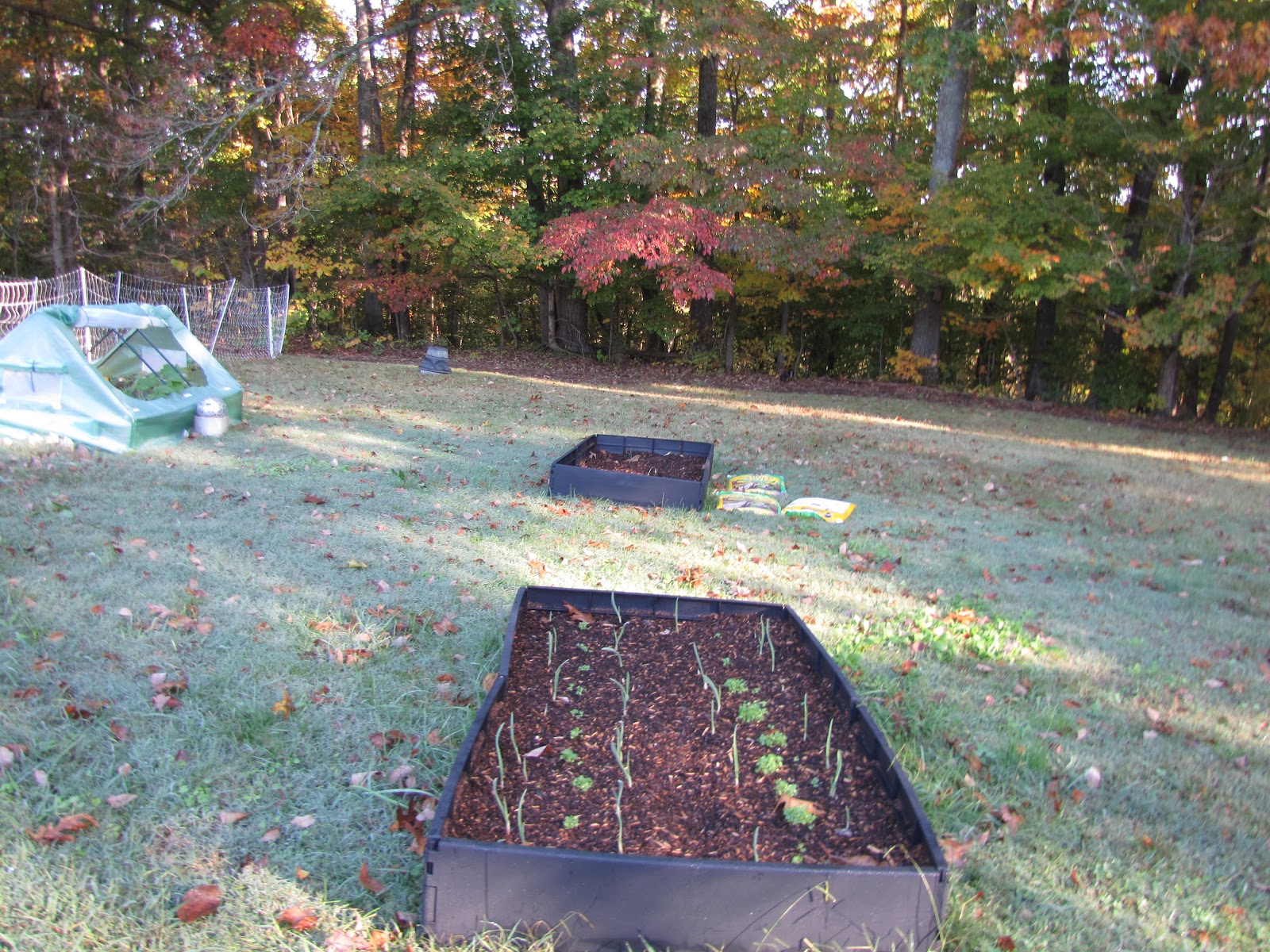
Two more 3' x 6' raised bed gardens were set up this weekend. One is now filled with bok choy seed and garlic. The other is still in a pending stage because it needs more soil. It will be my blackberry garden. Garden soil for vegetables, fruits and flowers needs to be carefully considered. The soil on our land is stony, lots of clay and little nutrients. I've tried to build it and make it more loomy but it takes just too darn long. The composter I use for garden debris and kitchen scraps and the hen house mulch also cannot keep up with my demand for gardening soil. I used about 1/3 of the composter soil as the base for both new gardens. I've been buying Miracle-Gro garden soil to fill the raised beds. It does do a fantastic job of supporting the plants throughout their life and the production volume based on this summer's tomatoes is great. Some of the volume may be attributed to the composted soil mixed in with the bought soil.
My other two raised bed gardens continue to produce: lettuce, turnip greens, cherry tomatoes and peppers. I have installed a cold frame canopy over one of the raised beds in order to have four seasons of vegetables.
Cold Frame
Our consumption of home-grown fall vegetables has increased to the point that I no longer need to buy salad greens at the store. The mescali mix of lettuce is just awesome. It grows very well and seems highly bug resistance. My turnip greens were gorgeous and tasty and then the patch was hit by pests over night. They decimated the crop. I am trying to decide whether to pull the skeleton greens out and start over or wait and see what the plants do with the secondary leafs and roots. I did break-out the organic bug spray solution, NEEM.
Organic Pest Control
The deer are back. They have babies with them. Turkeys, deers and raccoons, oh my! Wish I had a organic pest control for them. The turkeys also had a bumper crop of offspring this year. Now our turkey population is around 150 birds that roost in our mature oak trees hanging over Limestone Creek. It is very hard to hunt them as they disperse throughout the homes in the neighborhood. Can't shoot a neighbor or a pet! The deer are nuisances in the garden and graze the undergrowth around the trees to nothing. They compact soil and love to eat my greens.
They are lucky critters though; my hubby and I have converted to vegetaranism due to my gout. Red meat, fish, shellfish, turkey, chicken - all meat - have been given up. We have also cut our consumption of beer and wine to nothing. (I did enjoy a $12 glass of merlot this weekend when we ate out). So far, no further gout attacks. My hubby has lost fifteen pounds and I have lost eight pounds since we became all veggie-lovers.
My Dad loved bitter mustard greens. His way of planting his fall garden was to dump his turnip green seeds and his mustard green seeds together, till up the garden and then broadcast the seeds by thowing them in handfuls like baseballs at the ground. He would have a half acre of greens. I hated the taste of mustard greens; still do. But Dad would always have a pot of greens on the stove, bacon grease flavored, with buttermilk in the frig and cornbread in the iron skillet ready to go. I think the greens, buttermilk and cornbread combo kept his blood pressure down, his arteries clear and his overall health as hearty as an ox.
My other two raised bed gardens continue to produce: lettuce, turnip greens, cherry tomatoes and peppers. I have installed a cold frame canopy over one of the raised beds in order to have four seasons of vegetables.
Cold Frame
Our consumption of home-grown fall vegetables has increased to the point that I no longer need to buy salad greens at the store. The mescali mix of lettuce is just awesome. It grows very well and seems highly bug resistance. My turnip greens were gorgeous and tasty and then the patch was hit by pests over night. They decimated the crop. I am trying to decide whether to pull the skeleton greens out and start over or wait and see what the plants do with the secondary leafs and roots. I did break-out the organic bug spray solution, NEEM.
Organic Pest Control
The deer are back. They have babies with them. Turkeys, deers and raccoons, oh my! Wish I had a organic pest control for them. The turkeys also had a bumper crop of offspring this year. Now our turkey population is around 150 birds that roost in our mature oak trees hanging over Limestone Creek. It is very hard to hunt them as they disperse throughout the homes in the neighborhood. Can't shoot a neighbor or a pet! The deer are nuisances in the garden and graze the undergrowth around the trees to nothing. They compact soil and love to eat my greens.
They are lucky critters though; my hubby and I have converted to vegetaranism due to my gout. Red meat, fish, shellfish, turkey, chicken - all meat - have been given up. We have also cut our consumption of beer and wine to nothing. (I did enjoy a $12 glass of merlot this weekend when we ate out). So far, no further gout attacks. My hubby has lost fifteen pounds and I have lost eight pounds since we became all veggie-lovers.
My Dad loved bitter mustard greens. His way of planting his fall garden was to dump his turnip green seeds and his mustard green seeds together, till up the garden and then broadcast the seeds by thowing them in handfuls like baseballs at the ground. He would have a half acre of greens. I hated the taste of mustard greens; still do. But Dad would always have a pot of greens on the stove, bacon grease flavored, with buttermilk in the frig and cornbread in the iron skillet ready to go. I think the greens, buttermilk and cornbread combo kept his blood pressure down, his arteries clear and his overall health as hearty as an ox.
Wednesday, August 22, 2012
Fall is in the Air in North Alabama
It has been a brutal triple digit summer. The temperatures have been unbearable and the humidity worse. Finally, after such a hot summer, it has cooled down. This morning the temperature was a wonderful 62 degrees Farenheit. Fall is in the air. If I needed anymore evidence to confirm this fact, the black walnut tree is dropping its baseball sized nuts, which litter the side yard and the tree leaves are showing some change in color. I have never, ever been so glad for Fall.
I did get my Fall garden planted and it has sprouted. I really, really recommend raised bed gardening. It was my first year for it, and it was hugely successful. I will be moving my blackberry plants into one this fall. It is very hard to allow the blackberries uncrowded growth area in the lawn. My biggest struggle is keeping weeds from choking them out after berry season is over. So I am setting up at least two more six foot raised beds and transplanting my blackberries.
I also read that mountain laurel honey while safe for bees is poisonous to humans. It can cause paralysis of the throat if eaten. This highly concerns me because I propagated a thicket of native mountain laurel after my Master Gardener classes on native plants and it is thriving. Unfortunately I will be cutting it down this fall to avoid honey tainted with mountain laurel.
My American bees are doing great. I added a new small hive on top of the two brooder boxes. I highly recommend this variety of bees; they have done well in their first triple digit summer. It was a bit rough at the start as the queen wanted to swarm and I had to take preventative measures by picking her up and depositing her back in the hive. It was a mess of bees following her pheromones back into the hive. Since then, they have settled into their Langstroth hive and really gotten into the business of making home and brood. I will be attending the Alabama Beekeepers Association Annual Meeting in Montgomery in October with my oldest daughter. They will have so many speakers and classes that I don't know which ones to take. It will be great!
Finally I lost two hens this summer. Prissy, the white Orphington, died from the heat stress. And my little Buckeye was killed by a predator. Sad but such is life and we go on.
I did get my Fall garden planted and it has sprouted. I really, really recommend raised bed gardening. It was my first year for it, and it was hugely successful. I will be moving my blackberry plants into one this fall. It is very hard to allow the blackberries uncrowded growth area in the lawn. My biggest struggle is keeping weeds from choking them out after berry season is over. So I am setting up at least two more six foot raised beds and transplanting my blackberries.
I also read that mountain laurel honey while safe for bees is poisonous to humans. It can cause paralysis of the throat if eaten. This highly concerns me because I propagated a thicket of native mountain laurel after my Master Gardener classes on native plants and it is thriving. Unfortunately I will be cutting it down this fall to avoid honey tainted with mountain laurel.
My American bees are doing great. I added a new small hive on top of the two brooder boxes. I highly recommend this variety of bees; they have done well in their first triple digit summer. It was a bit rough at the start as the queen wanted to swarm and I had to take preventative measures by picking her up and depositing her back in the hive. It was a mess of bees following her pheromones back into the hive. Since then, they have settled into their Langstroth hive and really gotten into the business of making home and brood. I will be attending the Alabama Beekeepers Association Annual Meeting in Montgomery in October with my oldest daughter. They will have so many speakers and classes that I don't know which ones to take. It will be great!
Finally I lost two hens this summer. Prissy, the white Orphington, died from the heat stress. And my little Buckeye was killed by a predator. Sad but such is life and we go on.
Subscribe to:
Posts (Atom)